Youreight-year-old presses two fridge magnets together and feels them push apart.Your class watches a shadow stretch across the playground as the morning goeson. These small moments are real science. They sit at the heart of the Year 3and 4 topics in physical sciences: forces and energy.
This guide gives teachers and parents simple ways to turn everyday curiosityinto deep learning. You will find the big questions that get children thinking, two ready to use lessons, and clear ways to build science skills at school andat home. You will also find free NotesEdu resources that make the whole topiceasier to teach.
The big questions that sparkcuriosity
Childrenin Year 3 and 4 are full of questions. This topic gives them a way to chase theanswers. Pin these questions on the wall and let them lead your investigations:
- What are forces, and what makes objects move in different ways?
- How can one object affect another with or without touching it?
- How do we use forces in products and machines, and how can we make a force stronger or weaker?
- What is energy, and how does it make things happen?
- What forms of energy are around us, and how can we sense them?
- How do heat, light and electrical energy change the things around us?
- What energy changes can we watch happen?
- How is energy, including electricity, used in the products we rely on each day?
Keep encouraging questions. Every question is a doorway into an investigation.
What Year 3 and 4 students explore
This topic sits within the physical sciences strand of the Australian Curriculum. Across the unit, children meet three big ideas through things they can see, feel and test.
Light and heat: energy you cansee and feel
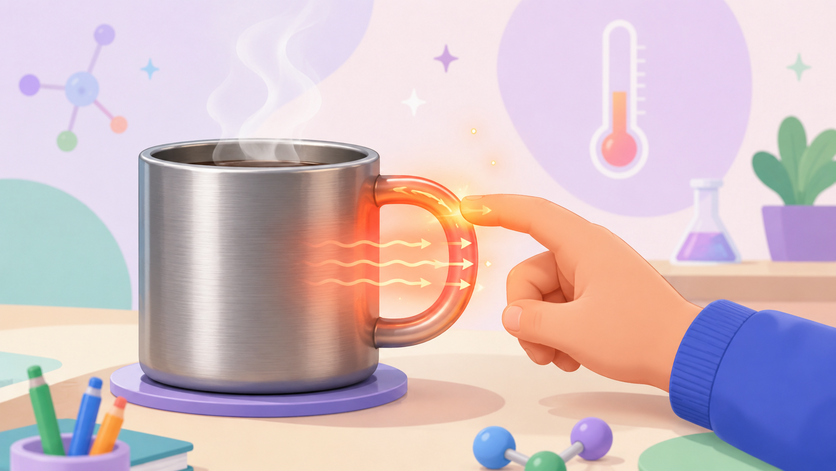
Pour warm water into a metal cup and the handle soon feels warm too. That is heat energy moving through the metal by conduction. Shine a torch at a wall and slide your hand in front of it. The light travels in straight lines, so a sharp shadow appears. Hold up clear plastic and the light passes through. Hold up cardboard and the light stops. Through moments like these, children describe the effects of heat, explore how heat moves by conduction, and investigate how light travels, reflects and is blocked.
Electricity: powering our worldin a cleaner way
Everylight switch, tablet and toaster runs on electrical energy. Children tracewhere that energy comes from, from a small battery to the power point in thewall. They then discover cleaner ways to make electricity, such as solar panelson a roof and wind turbines on a hill. These talks link science to the realchoices families make at home.
Forces: pushes, pulls andmovement
Everypush and pull is a force. Some forces need touch, such as kicking a ball orrubbing your hands together. Others act across a gap, such as a magnet pullinga paperclip or gravity dropping an apple. This is the difference betweencontact and non-contact forces. A rolling ball slows and stops because frictionpushes against it, which shows how a force changes speed and direction.Children then look inside everyday objects, such as a bicycle brake or amagnetic cupboard latch, to see how forces and materials work together to do auseful job.
Two ready to use 5E lessons
The5E model guides children through five stages: Engage, Explore, Explain,Elaborate and Evaluate. Here are two lesson flows you can run in class or adaptat home.
Light and heat: a 5E lesson flow
- Engage-Play with shadows and feel the warmth from a lamp. Let children ask their own wonder questions about light and heat.
- Explore-Set up rotating stations. At the light station, test shadows, reflection and which materials are see through or solid. At the heat station, find out which surface or colour warms up fastest.
- Explain-Name the sources of light and heat, describe how each one travels, and discuss their everyday effects. Build a class concept map together.
- Elaborate-Design a sundial or shadow clock. Investigate which material or colour heats fastest, then explain the result.
- Evaluate-Ask children to predict how light or heat would behave in a new setting. Have them complete a labelled diagram of the energy effects.
Guide thinking with simple stems. What are the effects of light and heat? Where does the energy come from? How does it travel and change things?
Contact and non-contact forces: a 5E lesson flow
- Engage-Show some magnet magic and roll a ball so it slows and stops. Ask what is happening to the movement.
- Explore-Rotate through investigations. Test friction on different surfaces and ramps, watch magnets attract and repel, and drop objects to explore gravity.
- Explain-Define contact and non-contact forces. Link each one to its effect on speed and direction.
- Elaborate-Design a marble run or a magnet powered game. Change the forces and watch how the motion changes.
- Evaluate-Ask children to predict and explain how an object will move in a new situation. Have them label the forces acting on a diagram.
Guide thinking with simple stems. What force is acting here? Is it a contact or non-contact force? How did the force change the way the object moved?
Helping children think like scientists
Strongscience is not only about facts. It is about how children investigate. Fiveskills grow across this topic, and each one is easy to support:
- Questioning and predicting. Start a class question wall where children post what they wonder. Offer sentence stems such as, "I wonder what would happen if," and "I predict, because." A good prediction always gives a reason.
- Planning and conducting. Design a fair test together. Change one thing and keep everything else the same. Add simple tools like rulers, thermometers and data loggers so observations stay safe and accurate.
- Processing, modelling and analysing. Help children record what they find. Move from drawings, to tally tables, to column graphs. Then ask the key question, "What pattern do you notice?"
- Evaluating. Compare the result with the prediction. Ask, "Did our result match our prediction? What surprised us? What would we change next time?" This is how children judge whether a test was fair.
- Communicating. Let children share findings in science journals, labelled diagrams and short talks. Teach the Claim, Evidence, Reasoning pattern. State what you found, show your proof, then explain why.
How NotesEdu brings forces and energy to life
NotesEduturns these ideas into an experience children want to come back to. Here is howit supports each part of the journey.
Build knowledge and understanding. Children step inside a 3D immersive experience that lets them watch light travel, see how heat spreads and follow forces in action. Watching a concept move makes it far easier to remember.
Spark inquisitiveness. Short, curious challenges and quizzes pose the kind of "why" and "what if" questions that get children leaning in. Each answer invites the next question.
Strengthen every inquiry skill. NotesEdu supports the five science skillsyour child is building:
- Questioning and predicting: quizzes invite children to predict an answer before they check it.
- Planning and conducting: downloadable activity sheets walk families and classes through safe, fair tests, step by step.
- Processing and modelling: activities show children how to record results and spot patterns in clear tables and graphs.
- Evaluating: instant feedback and worked solutions help children compare their answer with the correct one and see what to change.
- Communicating: simple diagrams and science vocabulary give children the words to explain what they found.
NotesEdu supports both teachers and parents with tools built for busy schedules.
Free resources to get started
Everythingbelow is free. Just click to begin:
- Step inside the free 3D immersive forces and energy experience
- Try a free science quiz
- Download the free experiment activity sheet
- Find more free downloadable resources
Frequently asked questions
What science do Year 3 and 4 students learn about forces and energy?
They learn how heat, light and electrical energy behave, and how pushes and pulls, including contact and non-contact forces, change the way objects move.
Whatis the difference between a contact and a non-contact force?
A contact force needsobjects to touch, such as friction or a kick. A non-contact force acts across agap, such as magnetism or gravity.
Howcan parents support science learning at home?
Ask open questions, try one simple fair testtogether, then let your child record and explain what they find. Free NotesEduquizzes and activities make this easy.
Turn curiosity into understanding
Forces and energy are everywhere your child looks, from the shadow on the path to the magnet on the fridge. With the right questions, a few simple tests and the right tools, every child can investigate like a real scientist. Start today with NotesEdu's free resources and watch curiosity grow into real understanding.