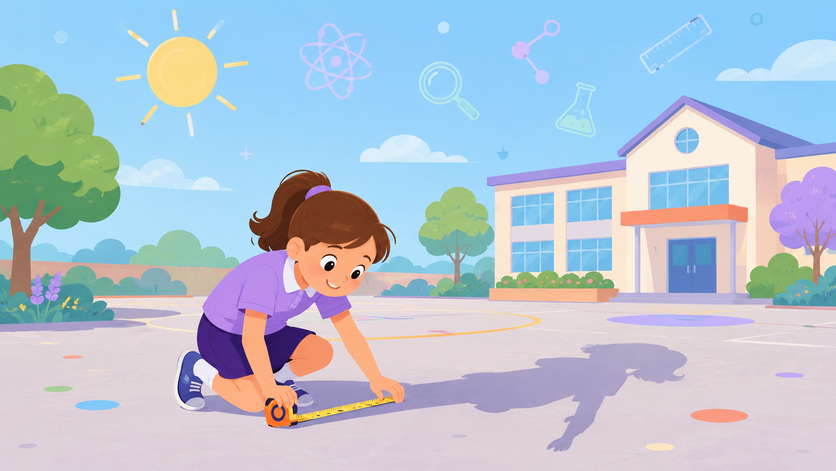
AYear 3 student stands in the playground at lunch and notices her shadow hasshrunk since the morning. A Year 4 student watches the sky turn orange and askswhy the day has to end. These small moments are the start of big science.
This guide shows teachers and parents how to turn everyday wonder about theEarth, the Sun and the sky into real learning for children in Year 3 and 4. Youwill also find free, ready to use resources that make each lesson easier.
What Year Children Learn in Earth and Space Science
Acrossthis topic, children build a clear picture of how the Earth, the Sun and theland work together.
The Sun, Our Biggest Source ofEnergy
Aska child where the warmth on their skin comes from on a sunny day. That simplequestion leads straight to the Sun. Children learn to recognise the Sun as themajor source of energy that warms our planet, lights our days and helps plantsgrow.
Day, Night and a Spinning Earth
Childrendiscover that the Earth spins on its axis like a slow, steady top. Thisrotation gives us the regular pattern of night and day. When their side of theEarth faces the Sun, it is day. When it turns away, night falls.
A Tiny Earth and a Giant Sun
Holdup a marble next to a beach ball and the size gap surprises most children.Through models like this, students explore the relative sizes of the Earth andthe Sun, and how the two move in space.
A Changing Earth's Surface
Theground beneath our feet is always changing. Children investigate how naturalprocesses such as wind, water and weather reshape the Earth's surface overtime, and how human activity does the same. They also learn that scientificknowledge helps people understand how their own actions affect the land, sothey can care for it wisely.
Big Questions That Get YoungScientists Wondering
Curiosityis the engine of science. Use these questions at school or at home to start aconversation:
What happens when the Earthand the Sun interact?
How do daily and seasonalchanges affect the world around us?
What is in the sky, and howshould we respond to changes up there?
How do natural processes andpeople change the Earth's surface over time?
How do sudden events likeearthquakes and extreme weather affect us?
What are the Earth'sresources, and how do we use and care for them?
How does the Earth comparewith other planets in the solar system?
How can we observe andinvestigate changes in the sky and on the land?
How can we live in harmonywith the Earth?
There is no need to know every answer. The goal is to keep children asking.
Helping Children Learn to ThinkLike Scientists
Goodscience is a set of skills children can practise. Here is how to build eachone.
Questioning and Predicting
Setup a class "question wall" where children post what they wonderabout. Give them sentence starters such as "I wonder what would happenif..." and "I predict... because...". This helps them asktestable questions and make predictions from what they already know.
Planning and Conducting
Workwith children to design a fair test. The rule is simple: change one thing andkeep everything else the same. Introduce easy tools like rulers, thermometersand data loggers so that observations stay safe and measurements stay fair.
Processing, Modelling andAnalysing
Helpchildren record what they find. Start with drawings, move on to tally tables,then build simple column graphs. Once the data is in front of them, ask,"What pattern do you notice?"
Evaluating
Afterthe activity, look back together. Ask, "Did our result match ourprediction? What surprised us? What would we change next time?" Thisteaches children to judge whether their method was fair.
Communicating
Childrenshare findings using science words, labelled diagrams and digital tools.Science journals, short presentations and simple Claim, Evidence and Reasoningstatements all work well.
Earth, Sun and the Changing Surface
This lesson uses the 5E model to investigate the regular changes caused by the Earth and the Sun, and the slow changes to the Earth's surface. As children work, ask these three questions: What pattern did you observe? How do the Earth and Sun cause it? What changes the Earth's surface over time?
5E phase
Engage: Ask, "Why is it dark at night, and why do shadows move?" Show a time lapse and gather predictions.
Explore: Model night and day with a torch and a globe. Track shadow length across one day. Look at examples of surface change, such as erosion.
Explain: "Link the Earth's rotation to night and day. In an age appropriate way, link its orbit to the seasons. Talk about slow changes to the surface.
Elaborate: Build a working sundial. Model erosion in a sand and water tray, then watch how the surface changes.
Evaluate: Use the Earth and Sun model to explain a pattern, such as why shadows change length through the day.
How NotesEdu Brings Earth and Space Science to Life
Children learn best when they can see, touch and test ideas. NotesEdu supports every step of the science journey, and many resources are free.
Picture a child stepping inside the free 3D immersive experience. She watches the Earth, sees day turn to night and explores the surface up close. This builds solid knowledge and feeds her curiosity. The free quizzes then invite her to ask and answer questions, and to check whether her predictions were right. The free hands on activities guideher to plan a fair test and record results in tables and graphs. Finally, the free downloadable material, including science journals and labelled diagramtemplates, helps her communicate what she has found.
In other words, NotesEdu walks children through the full inquiry path. Theyquestion and predict, plan and conduct, process and model, evaluate, thencommunicate. Knowledge and curiosity grow side by side.
Explorethe free resources here
- Try the free 3D immersive experience
- Take a free quiz
- Download free activities
- Get free printable material
Start Exploring Today
Youdo not need to be a scientist to teach Earth and space science. You only needto follow a child's curiosity and give it room to grow. Pick one question, tryone activity, then watch the wonder build. Click the links above to begin withfree NotesEdu resources today.