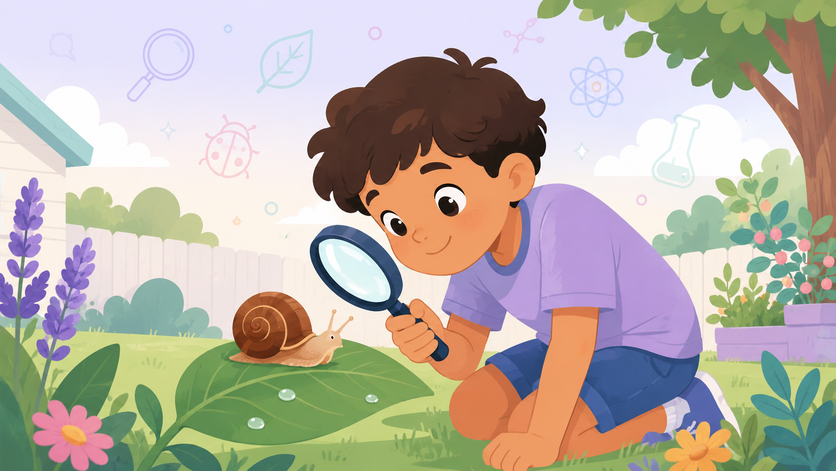
Picture your child crouched in the backyard, magnifying glass in hand, watching a snail glide across a wet leaf. Then comes the question: "Is the leaf alive too?" That single moment holds the heart of Year 3 and 4 biological science. Children at this age are natural investigators. They poke, sort, wonder and test. The science curriculum simply gives that curiosity a clear path to follow.
This guide walks teachers and parents through what Year 3 and 4 students learn about living things. You will find hands-on activities, the thinking skills children build, and free NotesEdu tools that turn everyday wonder into deep understanding.
What Children Explore
By the end of these years, children do far more than name a few plants and animals. They learn how living things depend on each other and on their environment to survive. They collect data and spot patterns to sort living things by their external features, and they tell living things apart from non-living ones.
They also discover that every living thing follows a life cycle, and they run their own investigation into the life cycle of a plant or an animal. Closer to the dinner table, they study how Australian farms use both traditional and advancing technologies to produce food and fibre. They even explore the food technologies and techniques that help us make healthy meals.
Living and Non-Living Things
This topic asks one big question: what makes something living? Children compare features, then build their own rules for life. Here is how the learning journey unfolds, and how you can copy it at home or in class.
Engage. Fill a mystery box with a seed, a rock, a toy, a pot plant and a shell. Ask children to sort each item into "living" or "not living" and to say why. Run a quick class poll and record their reasons. The debate starts straight away.
Explore. Setup observation stations. Let children examine living, non-living and once-living specimens up close, then record the features they notice on a chart.
Explain. Now build shared rules for what counts as living. Introduce the life processes with the memory aid, which stands for movement, respiration, sensitivity, growth, reproduction, excretion and nutrition. This is also the moment to clear up common mix-ups, such as "Is fire alive?" or "Is a car alive?"
Elaborate. Test the new rules on tricky cases like a seed, coral or a dried leaf. Sort them into a living, non-living and once-living Venn diagram.
Evaluate. Hand children three brand new objects. Ask them to classify each one and back up their choice with evidence against the agreed rules.
From Farm to You: Food, Fibre and Shelter
This topic shows how farming turns plants and animals into the food we eat, the clothes we wear and the shelter we use. Children learn each step and why it matters.
Engage. Ask one simple question: "Where did your breakfast come from?" Pick one food item and trace it back to a farm. Map the journey together.
Explore. Plant a fast-growing herb or seed and keep an observation journal. At the same time, follow the farm-to-table chain for one product.
Explain. Put the steps in order for both a plant product and an animal product. Talk about the work farmers do and how the seasons shape it.
Elaborate. Setup a class garden plot, or compare two fibre products such as wool and cotton.Look at where each one comes from and how it is processed.
Evaluate. Finish with a labelled flow chart that tracks one product on its journey from farm to plate, with a note on why each step is needed.
Five Skills That Turn Curious Kids Into Scientists
Activities are only half the story. The real value lies in the thinking skills children practise along the way. These five skills sit at the core of Year 3 and 4science inquiry.
Questioning and predicting. Children pose questions they can actually test and make predictions from what they already know. A class "question wall" and sentence stems help, such as "I wonder what would happen if..." and "I predict...because...".
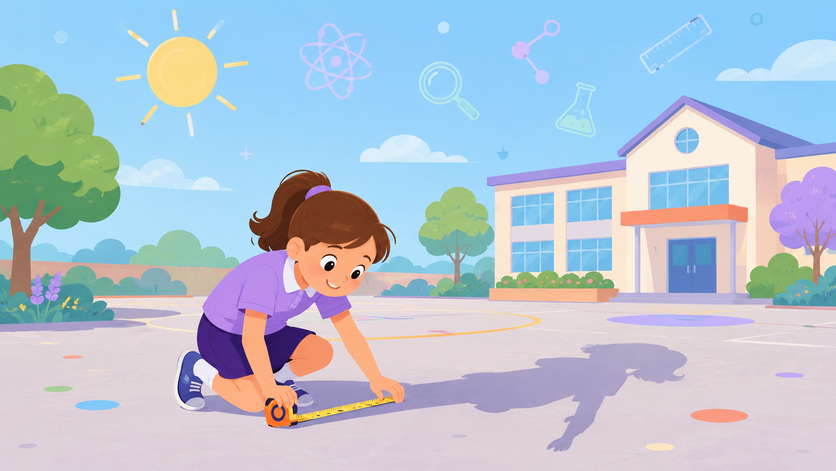
Planning and conducting. Children suggest ways to investigate and make safe, fair observations. Together you can design a fair test, where you change one thing and keep everything else the same. Simple tools like rulers, thermometers and data loggers add real measurement.
Processing and modelling. Children sort and present their data in tables, diagrams and simple graphs, then look for patterns. A natural path is to move from drawings, to tally tables, to column graphs. The key prompt is "What pattern do you notice?"
Evaluating. Children compare their results with their predictions and decide if their method was fair. Useful questions include "Did our result match our prediction? What surprised us? What would we change?"
Communicating. Children report what they found using science words, drawings and digital tools. Science journals, labelled diagrams, short presentations and Claim, Evidence, Reasoning statements all work well.
How NotesEdu Helps Your Young Scientist Thrive
Curiosity needs the right fuel. NotesEdu gives Year 3 and 4 children engaging, curriculum-linked tools that build both knowledge and confidence.
Build real understanding
Children work through thousands of curriculum-linked questions, each with a clear, step-by-step solution. Hard ideas like life cycles, classification and food production become simple to grasp. Parents and teachers can follow detailed progress reports, so you always know what to revise next.
Spark curiosity and inquiry
NotesEdu turns passive reading into active discovery. The platform supports every inquiry skill your child builds at school:
- Questioning and predicting: a free 3D immersive experience lets children explore living things and habitats up close, which sparks fresh "I wonder..." questions.
- Planning and conducting: downloadable fair-test planners and activity sheets guide children to investigate safely and fairly.
- Processing and modelling: sorting charts and data templates help children organise their findings and spot patterns.
- Evaluating: interactive quizzes give instant feedback, so children can check their predictions and rethink their methods.
- Communicating: science journal pages and labelled diagram templates help children share what they learned with confidence
Start for free today
You can try NotesEdu without spending a cent. Explore the free 3D immersive experience, quizzes, activities and downloadable materials by clicking the links below:
- Take a free practice tests
- Explore quizzes, activities and the 3D experience
- Download study materials and activity sheets
Frequently Asked Questions
What science do children learn in Year 3 and 4?
They study living things: how living things survive, how to group them by their features, the life cycles they follow, and how farms produce food and fibre.
How can I help my child with science at home?
Encourage questions, sort objects together, plant a seed and keep an observation journal. Free NotesEdu activities make this easy to start.
What is a fair test?
A fair test changes one thing and keeps everything else the same. This way, children can trust their results.
When should my child start using NotesEdu?
Any time. The free tools suit Year 3 and 4 learners, and you can begin with no payment details required.
Grow a Lifelong Love of Science
Every great scientist began as a curious child with a question. With the right activities and the right support, your Year 3 or 4 student can build knowledge,confidence and a genuine love of discovery. Start that journey today withNotesEdu's free 3D experience, quizzes and downloadable resources.